
Lake Bled
Best for: First-time visitors, couples, photographers and families
Time needed: Six to eight hours
Travel time: Approximately 45–60 minutes by car or 45–80 minutes by bus
Public transport: Easy
Guided tour: Convenient but not essential
Approximate budget: €20–€70 independently or €70–€150 with a tour and attractions
A Ljubljana to Lake Bled day trip is the most popular excursion from the capital—and for good reason.
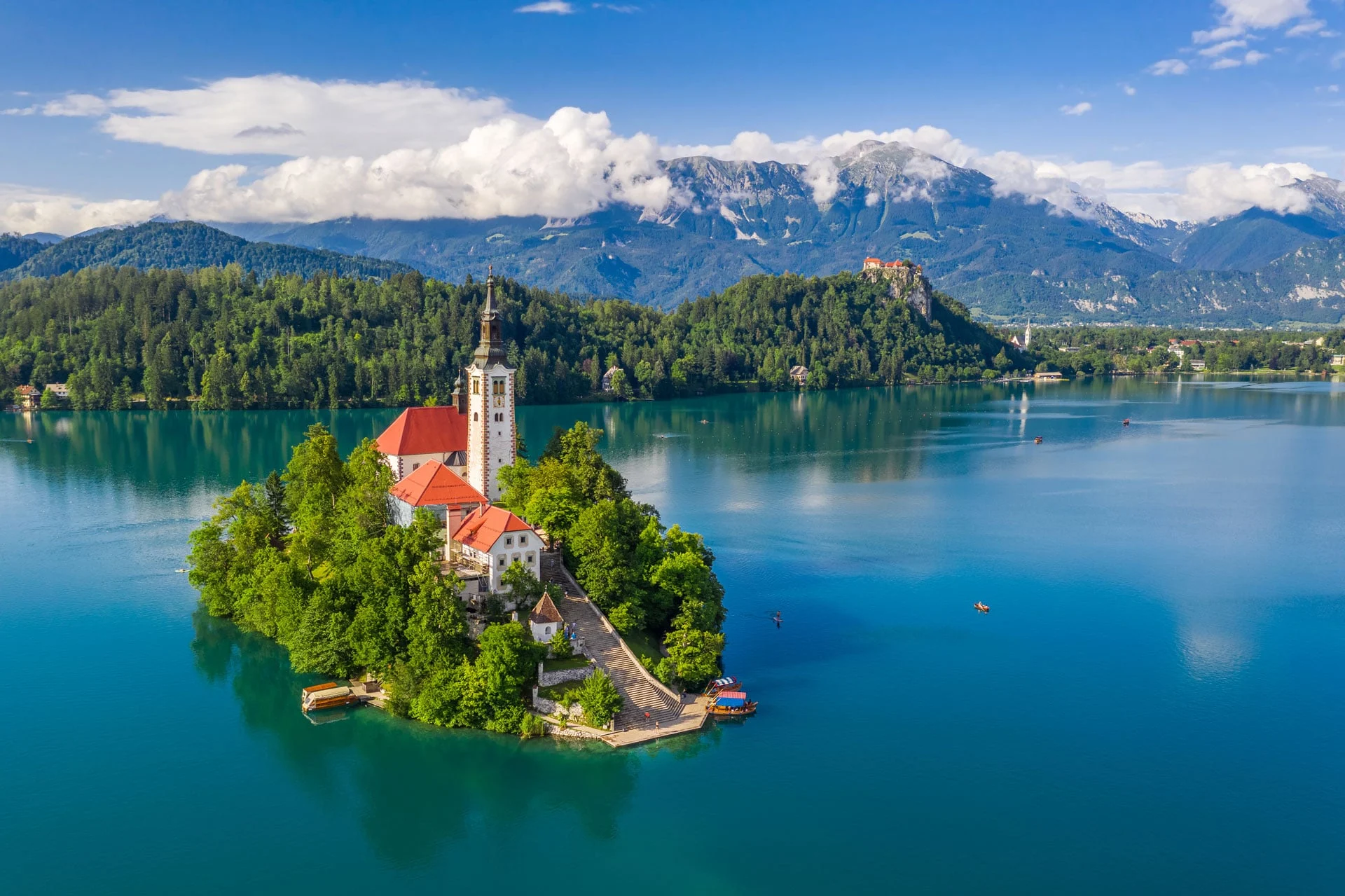
Lake Bled combines nearly every image visitors associate with Slovenia: emerald water, a small island church, a medieval castle on a cliff and the peaks of the Julian Alps in the background. It is polished and popular, but its scenery remains genuinely impressive.
Regular buses leave Ljubljana throughout the day and stop near the centre of Bled, a short walk from the lakeshore. More than 20 daily departures may operate during busy periods, making Bled one of the easiest places to visit near Ljubljana without renting a car.
Best things to do at Lake Bled
Start with a walk along the lakeshore. The complete circuit is approximately six kilometres and normally takes between 90 minutes and two hours, depending on how often you stop.
Other highlights include:
- Taking a traditional pletna boat to Bled Island
- Visiting the Church of the Mother of God on the Lake
- Climbing to Bled Castle
- Trying Bled cream cake
- Renting a rowing boat
- Swimming during summer
- Walking to the Ojstrica viewpoint
- Continuing to nearby Radovljica
Bled Castle admission currently costs €19 for adults. Entrance to the church, bell tower and museum exhibition on Bled Island costs €12 for adults, although the boat journey is charged separately.
How long do you need?
Allow at least six hours if you want to walk around the lake, visit the castle and stop for lunch. Eight hours is more comfortable if you plan to visit the island or climb to Ojstrica.
Trying to combine the full lakeside circuit, castle, island and Vintgar Gorge in a short visit can feel rushed.
Is a guided tour worth it?
An organised tour is useful when:
- You have only one free day in Slovenia
- You want to combine Bled with Bohinj or Postojna Cave
- You do not want to understand bus schedules
- You prefer hotel pickup
- You want historical context from a guide
Independent travel is easy for visitors who only want to explore Lake Bled itself.
Best combination: Radovljica, Vintgar Gorge or Lake Bohinj.

Lake Bled and Vintgar Gorge
Best for: Active travellers, nature lovers and photographers
Time needed: Eight to ten hours
Travel time: Around one hour to the Bled area
Public transport: Possible but requires planning
Guided tour: Often more practical
Approximate budget: €30–€80 independently or €80–€150 with a tour
Combining Lake Bled with Vintgar Gorge creates one of the most complete nature-focused day trips from Ljubljana.
Vintgar Gorge lies approximately four kilometres from Bled. A wooden walkway follows the Radovna River through a narrow gorge filled with pools, rapids and waterfalls. The gorge section is approximately 1.6 kilometres long, but the current visitor route includes a longer return trail. Visitors are advised to allow around three hours for the complete experience.
How to organise the day
A sensible itinerary is:
- Leave Ljubljana early.
- Visit Vintgar Gorge before the busiest part of the day.
- Return to Bled for lunch.
- Walk around part of the lake.
- Visit Bled Castle or take a boat to the island.
- Return to Ljubljana in the early evening.
The Vintgar Gorge All-in-One Pass currently costs €15 for adults and includes the official access arrangements. Visitors arriving by car use the central VINTGAR LIP parking area and take the frequent shuttle to the visitor centre. Tickets are limited by time slot, so booking online is recommended.
Seasonal limitations
Vintgar Gorge normally operates between April and October, with exact dates and opening hours depending on weather and trail conditions. It is not a reliable winter excursion.
Do you need a car?
A car is helpful, but not essential during the operating season. Visitors can travel by bus from Ljubljana to Bled and use the seasonal Vintgar shuttle from Bled.
A guided tour is easier when you want to see the gorge, lake, castle and island in a single day without losing time between connections.
Best for: Travellers who want a more active alternative to a standard Lake Bled excursion.

Lake Bohinj
Best for: Outdoor travellers, swimming, hiking and peaceful landscapes
Time needed: Eight to ten hours
Travel time: Approximately 1 hour 20 minutes by car; longer by bus
Public transport: Good, but the journey takes time
Guided tour: Useful for combining several attractions
Approximate budget: €20–€80 independently or around €100–€140 with a tour
Lake Bohinj is larger, wilder and less developed than Lake Bled. It lies within Triglav National Park and is surrounded by forests, mountain pastures and the peaks of the Julian Alps.
While Bled is Slovenia’s best-known lake, Bohinj is often more rewarding for travellers who prioritise nature over famous landmarks.
Bohinj has regular bus connections with Ljubljana, with services continuing to the lakeside and toward Ukanc. Ljubljana Bus Station also promotes an itinerary that combines the lake, panoramic boat and Vogel cable car using public transport.
Best things to do at Lake Bohinj
For a first visit, concentrate on one or two areas rather than attempting to circle the entire lake.
Good options include:
- Ribčev Laz and the Church of St John the Baptist
- A walk beside the eastern lakeshore
- Swimming or paddleboarding in summer
- A panoramic boat journey
- The Vogel cable car
- Savica Waterfall
- Mostnica Gorge
- Ukanc and the western lakeshore
The return Vogel cable-car ticket costs approximately €33 for an adult during the main summer season. Combination packages may include a boat journey, cable car and church admission.
Lake Bohinj or Lake Bled?
Choose Bled for castles, island views, easy logistics and iconic photographs.
Choose Bohinj for swimming, hiking, tranquillity and access to Triglav National Park.
A current organised excursion combining Bled, Bohinj and Savica Waterfall is advertised at approximately €109 per adult, with some Bled attractions available as optional extras.
Seasonal considerations
Bohinj can be visited throughout the year, but the experience changes considerably.
Summer is best for swimming, boating and long days outdoors. Autumn brings attractive colours and fewer visitors. Winter is suitable for snowy scenery and skiing at Vogel, while some hiking routes, waterfalls and mountain facilities may be inaccessible.
Best combination: Lake Bled for a fast highlights tour, although Bohinj deserves its own day whenever possible.

Postojna Cave and Predjama Castle
Best for: Families, rainy days and first-time visitors
Time needed: Six to eight hours
Travel time: Around one hour by car or bus
Public transport: Easy for Postojna, less convenient for Predjama
Guided tour: Recommended for visiting both attractions
Approximate budget: €60–€90 independently or €110–€170 with a tour
Postojna Cave and Predjama Castle form one of Slovenia’s most popular sightseeing combinations.
Postojna Cave offers a highly accessible underground experience that includes a train ride and guided walking tour through large chambers filled with stalactites and stalagmites. Predjama Castle stands approximately nine kilometres away, built directly into the opening of a high limestone cliff.
The journey from Ljubljana to Postojna can take around 50 minutes by bus. Postojna is therefore possible without a car, but reaching Predjama Castle and coordinating both attractions makes the independent trip more complicated.
How much does it cost?
A combined Postojna Cave and Predjama Castle ticket is currently advertised at approximately €49.90 per adult, while Postojna Cave-only tickets start at around €34.90. Prices can vary according to packages and online promotions.
What to expect
The Postojna Cave visit is controlled and timed. Arrive before your scheduled entrance and bring a warm layer because the underground temperature remains cool even during summer.
At Predjama Castle, an audio guide explains the building’s defensive position, rooms and legends surrounding the knight Erazem.
Is a guided tour worth it?
Yes, particularly if you want to visit both attractions.
A tour removes the transfer problem between Postojna and Predjama and may include additional destinations such as Lake Bled or Piran. Current Ljubljana-based tours combining Postojna Cave, Predjama Castle and Piran are advertised from approximately €115 per adult, with attraction admission sometimes charged separately.
Best combination
Combine Postojna Cave and Predjama Castle with:
- Piran for a long full-day tour
- Lake Bled for a fast Slovenia highlights excursion
- Rakov Škocjan for a nature-focused self-drive route
- Štanjel for Karst architecture and village scenery

Škocjan Caves
Best for: Dramatic natural landscapes, geology and UNESCO heritage
Time needed: Six to eight hours
Travel time: Around one hour by car
Public transport: Possible but inconvenient
Guided tour: Recommended without a car
Approximate budget: €35–€70 independently or €100–€140 with a tour
Škocjan Caves offer a very different experience from Postojna.
Postojna is more developed, theatrical and family-oriented. Škocjan feels larger, darker and more dramatic, with an enormous underground canyon formed by the Reka River.
The cave system was the first Slovenian site added to UNESCO’s World Heritage List and remains one of the country’s most important natural monuments. Tours operate at scheduled times, and advance online booking is strongly recommended because popular departures can sell out.
How to reach Škocjan Caves
Driving is the easiest option. Public transport generally involves travelling to Divača and then continuing by local transport, taxi, seasonal shuttle or on foot, depending on the available connections.
A guided tour from Ljubljana is the better option for visitors who do not want to rent a car.
How long do you need?
Allow around two to three hours for the cave tour, visitor centre and viewpoints. You can then add one nearby destination.
What can you combine with Škocjan Caves?
Good combinations include:
- Lipica Stud Farm
- Štanjel
- Piran
- The Karst wine region
- Sežana Botanical Garden
- A local prosciutto and Teran wine tasting
Postojna or Škocjan?
Choose Postojna for families, accessibility, the cave train and Predjama Castle.
Choose Škocjan for immense underground spaces, natural drama and UNESCO significance.

Piran and the Slovenian Coast
Best for: Couples, architecture, seafood and Mediterranean atmosphere
Time needed: Eight to ten hours
Travel time: Around 1.5 hours by car or approximately two hours by bus
Public transport: Possible
Guided tour: Useful for combining the coast with caves
Approximate budget: €25–€70 independently or €100–€150 with a tour
Piran is one of the most beautiful towns in Slovenia and the best day trip from Ljubljana for visitors who want a complete change of scenery.
Its narrow streets, Venetian-influenced architecture, seaside promenade and terracotta rooftops feel far removed from Ljubljana and the Alpine regions. The historic centre is compact and largely pedestrianised, making it easy to explore on foot.
Current direct bus journeys from Ljubljana to Piran take approximately two hours and five minutes. Travelling by car is faster, but visitors normally park outside the historic centre and continue on foot or by shuttle.
Best things to do in Piran
- Begin in Tartini Square
- Walk to the Church of St George
- Climb the bell tower
- Visit the medieval town walls
- Explore the lanes around Punta
- Walk along the seafront
- Eat seafood or pasta
- Swim from one of the town’s bathing areas
- Continue to Portorož or the Sečovlje Salt Pans
Piran is best enjoyed slowly. Avoid filling every hour with attractions. The pleasure comes from exploring side streets, stopping beside the sea and enjoying lunch with a view.
Public transport or car?
The bus works well when your main objective is Piran itself.
A car is better when you want to combine several coastal destinations, such as:
- Piran and the Sečovlje Salt Pans
- Piran and Koper
- Piran and Izola
- Piran and Strunjan
- Piran and Hrastovlje
Is a tour worthwhile?
A tour is particularly useful for combining Piran with Postojna Cave, Predjama Castle or Škocjan Caves. This creates a long day, but it allows visitors with limited time to experience both Slovenia’s Karst landscape and Adriatic coast.
Seasonal tip: Piran is attractive throughout the year. Summer is best for swimming but also brings heat, traffic and crowds. Spring and early autumn offer more comfortable conditions for sightseeing.

Velika Planina
Best for: Mountains, easy hiking, photography and traditional culture
Time needed: Six to nine hours
Travel time: Approximately one hour to the lower cable-car station
Public transport: Difficult
Guided tour: Useful
Approximate budget: €40–€80 independently or €90–€160 with a tour
Velika Planina is one of the most distinctive mountain destinations in Slovenia.
The high plateau above Kamnik is known for its traditional wooden shepherd huts, open pastures and extensive views toward the Kamnik-Savinja Alps. During the summer grazing season, cows return to the plateau and some shepherds serve simple dairy dishes and traditional food.
The fastest route uses the cable car from the Kamniška Bistrica Valley, followed by a chairlift or uphill walk. The cable car reaches the plateau in approximately five minutes, while current services generally operate at regular half-hour intervals.
What to do on Velika Planina
- Walk through the shepherds’ settlement
- Visit the Chapel of Our Lady of the Snows
- Try sour milk and žganci during shepherd season
- Hike between Velika, Mala and Gojška Planina
- Photograph the traditional oval-roofed huts
- Enjoy views toward the Kamnik-Savinja Alps
- Stop at a mountain restaurant
Do you need a car?
A car is strongly recommended for independent visitors because the lower cable-car station lies beyond Kamnik in the Kamniška Bistrica Valley.
Public transport can sometimes get you part of the way, but connections do not always align efficiently with cable-car operating hours.
Seasonal limitations
Velika Planina can be visited in every season, but conditions vary dramatically.
The shepherd settlement is liveliest from late spring through summer. Spring crocuses attract photographers, although the timing changes every year. Autumn is quieter and excellent for walking. Winter requires suitable footwear and preparation for snow, ice and rapidly changing mountain weather.
Cable-car and chairlift maintenance can temporarily restrict access, so verify operations before departing.
Best combination: Kamnik old town or the Kamniška Bistrica Valley.

Kamnik
Best for: An easy half-day trip, medieval architecture and cafés
Time needed: Four to six hours
Travel time: 35–45 minutes by car or around 50–55 minutes by bus
Public transport: Easy
Guided tour: Not necessary
Approximate budget: €10–€35
Kamnik is one of the easiest Ljubljana day trips for travellers who want to see another Slovenian town without spending several hours in transit.
The medieval centre contains two historic castle sites, a monastery, colourful buildings and Šutna, a street associated with the town’s historic crafts and trading activity. Mali Grad hill provides an accessible viewpoint over the rooftops and surrounding mountains.
Best things to do in Kamnik
- Walk through the old town
- Explore Šutna Street
- Climb Mali Grad hill
- Visit the Franciscan monastery
- Stop at a local café
- Visit Zaprice Castle
- Continue to Volčji Potok Arboretum
- Add Terme Snovik
- Drive into the Kamniška Bistrica Valley
Is Kamnik worth a full day?
The old town itself works well as a half-day trip. To create a full-day itinerary, combine it with one additional attraction.
The best options are:
- Kamnik and Velika Planina
- Kamnik and Volčji Potok Arboretum
- Kamnik and Terme Snovik
- Kamnik and Kamniška Bistrica
Buses from Ljubljana frequently complete the journey in approximately 49–56 minutes.
Best for: Travellers seeking a relaxed and inexpensive alternative to Slovenia’s headline attractions.
Škofja Loka
Best for: Medieval history, photography and slow travel
Time needed: Four to six hours
Travel time: Approximately 30–40 minutes
Public transport: Easy
Guided tour: Optional
Approximate budget: €10–€40
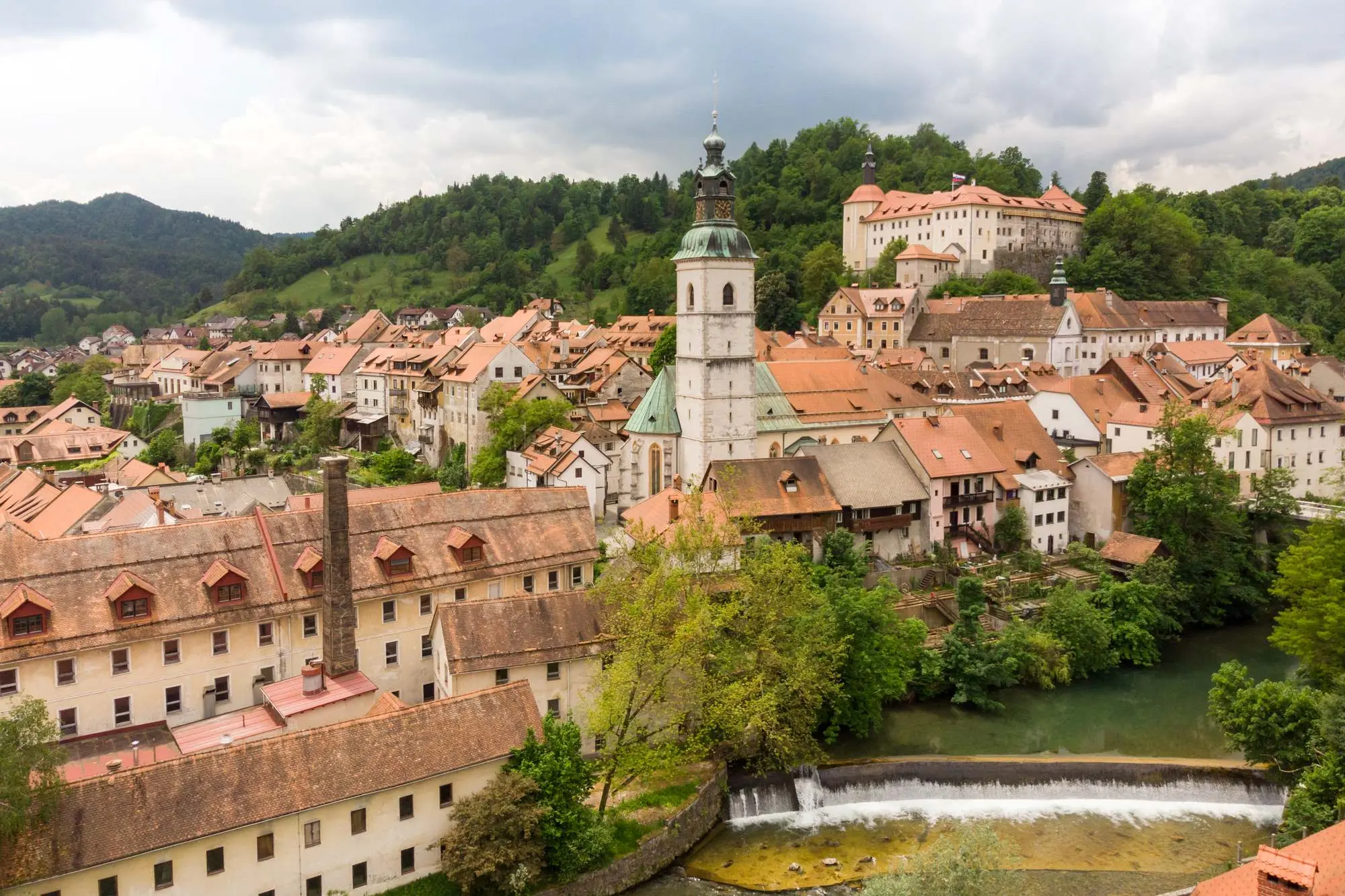
Škofja Loka is one of Slovenia’s best-preserved medieval towns and an excellent choice for travellers who have already visited Ljubljana’s main attractions.
The old town stands beneath Loka Castle at the meeting point of the Poljanska and Selška valleys. Its painted façades, stone bridges, quiet lanes and compact historic centre make it one of the most photogenic places near Ljubljana.
Best things to do in Škofja Loka
- Explore Mestni Trg, the main town square
- Cross the historic Capuchin Bridge
- Walk up to Loka Castle
- Visit the Škofja Loka Museum
- Explore the castle garden
- Walk through Spodnji Trg
- Try local cakes or traditional dishes
- Follow part of the Trail of Three Castles
Who will enjoy this trip?
Škofja Loka suits visitors who prefer atmosphere and architecture to a long list of major attractions. It is especially enjoyable for photographers, couples and travellers interested in crafts and cultural heritage.
The old town is compact enough for a half-day visit, but nearby walking trails and villages can extend the excursion.
Best combination: Kranj, Poljane Valley or a countryside lunch in the Škofja Loka hills.
Vipava Valley
Best for: Wine, local food, cycling and rural Slovenia
Time needed: Eight to ten hours
Travel time: Around one hour by car
Public transport: Limited for rural exploration
Guided tour: Strongly recommended for wine tasting
Approximate budget: €50–€120 independently or €120–€220 with a private or small-group tour
The Vipava Valley is one of the best day trips from Ljubljana for food and wine lovers.
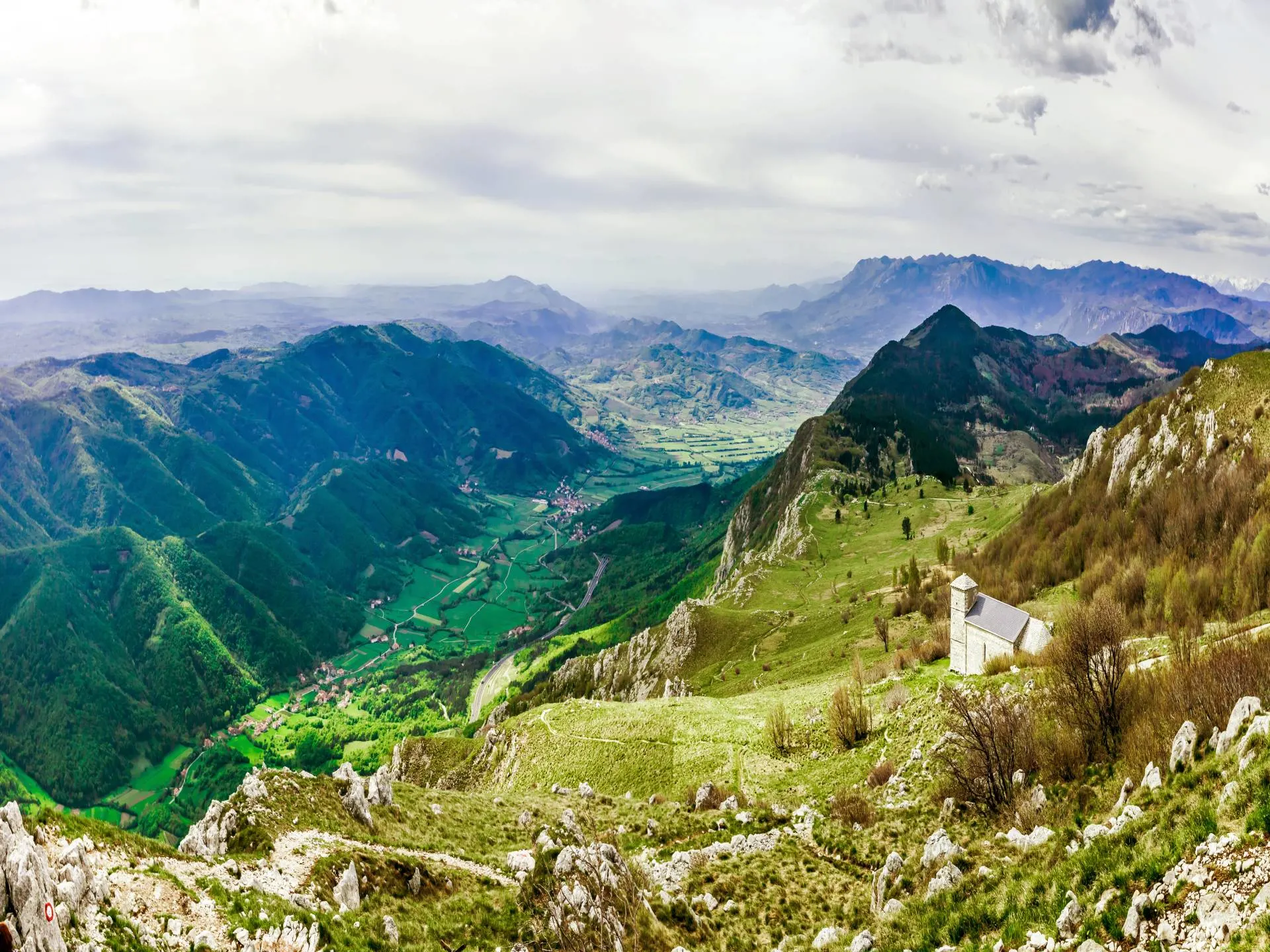
Located between the Alps, Karst and Adriatic, the valley is shaped by vineyards, stone villages, orchards and the strong burja wind. Local wineries produce varieties including Zelen and Pinela, while farms and restaurants serve seasonal dishes influenced by both inland Slovenia and the Mediterranean.
The official Slovenian tourism portal highlights the Vipava Valley for its distinctive wines, gastronomy, active experiences and location between Alpine and Adriatic landscapes.
Best places to visit
A self-drive route might include:
- Vipava
- Ajdovščina
- Vipavski Križ
- Goče
- Slap
- A family-run wine cellar
- A local restaurant or tourist farm
Do you need a car?
A car is the most practical option for general sightseeing, but it creates an obvious problem if everyone wants to taste wine.
A guided wine tour is therefore one of the best ways to experience the valley. Tours usually include transport from Ljubljana, scheduled cellar visits, tastings and local food.
Plan winery visits in advance
Many Vipava wineries are small, family-operated businesses rather than walk-in tourist attractions. Reservations are strongly recommended, particularly outside summer weekends.
Do not assume that every cellar will be open throughout the day.
Best for: Couples, small groups, food travellers and visitors looking for a more personal side of Slovenia.

Goriška Brda
Best for: Romantic scenery, premium wine and gastronomy
Time needed: Nine to eleven hours
Travel time: Approximately 1 hour 30 minutes
Public transport: Poor for a day trip
Guided tour: Recommended
Approximate budget: €70–€150 independently or €140–€250 with a tour
Goriška Brda is Slovenia’s most visually famous wine region.
Its rolling vineyard-covered hills, orchards, stone villages and distant Alpine views are frequently compared with Tuscany, although Brda has its own borderland identity and winemaking traditions.
The most popular stops include the fortified village of Šmartno, Dobrovo Castle, Villa Vipolže and the Gonjače viewing tower. The region is best experienced slowly, ideally with a winery visit and a long lunch overlooking the vineyards.
Vipava Valley or Goriška Brda?
Choose Vipava Valley for intimate wineries, native grape varieties and a more understated rural atmosphere.
Choose Goriška Brda for panoramic vineyard scenery, polished wine tourism and romantic restaurants.
Why a car or tour is necessary
The attractions are distributed among villages and hills. Public transport does not provide a practical way to visit several wineries, viewpoints and restaurants during a single day.
A private or small-group wine tour is the most comfortable solution, particularly when tastings are part of the itinerary.
Best time to visit
Late spring, early summer and September are particularly attractive. Harvest season brings energy to the region but also increases demand for tastings, accommodation and restaurants.
Local tip: Reserve lunch before travelling. The best restaurants and tourist farms may be full even outside peak summer.

Logar Valley
Best for: Scenic drives, walking, waterfalls and Alpine nature
Time needed: Nine to eleven hours
Travel time: Approximately 1 hour 30 minutes
Public transport: Impractical for a day trip
Guided tour: Available but less common
Approximate budget: €40–€100 per person when sharing a car
Logar Valley is one of the most beautiful glacial valleys in the Alps and one of Slovenia’s finest self-drive excursions.
A road runs between meadows, traditional farms, forests and mountain walls toward the head of the valley. The scenery is impressive without requiring a difficult hike, making it suitable for families, couples and casual walkers.
The valley is protected as a landscape park and is promoted for hiking, cycling, horse riding and nature photography.
Best things to do
- Drive the panoramic valley road
- Follow the Logar Valley Trail
- Walk to Rinka Waterfall
- Stop near the Palenk Waterfall
- Visit the Solčava panoramic road
- Eat at a traditional tourist farm
- Visit the village of Solčava
- Explore the Matkov Kot or Robanov Kot valleys
Entrance fee
The landscape-park fee is charged to motorised vehicles rather than individual visitors. The current fee is €10 for a car, while visitors entering on foot or by bicycle do not pay an entrance fee.
Seasonal limitations
The valley is most straightforward from late spring to autumn.
Snow and ice can affect trails, road access and waterfall routes during winter. Rinka Waterfall may also vary considerably according to rainfall and snowmelt.
Is it too far for a day trip?
It is a long but rewarding excursion from Ljubljana. Leave early and avoid adding too many secondary stops.
For a slower trip, spend a night in the Solčava region rather than returning immediately to Ljubljana.

Kranjska Gora and Lake Jasna
Best for: Alpine views, families, cycling and easy outdoor activities
Time needed: Eight to ten hours
Travel time: Approximately 1 hour 15 minutes by car or around two hours by bus
Public transport: Possible
Guided tour: Available
Approximate budget: €25–€80 independently or €100–€170 with a tour
Kranjska Gora is one of Slovenia’s best-known Alpine resorts and a convenient base for exploring the Upper Sava Valley.
Lake Jasna lies just outside the town and provides one of the easiest mountain panoramas in Slovenia. The small lakes reflect the surrounding peaks and can be reached without a demanding hike.
Best things to do
- Walk around Lake Jasna
- Explore central Kranjska Gora
- Cycle toward Mojstrana or the Italian border
- Visit the Zelenci Nature Reserve
- Continue to Planica Nordic Centre
- Walk into the Tamar Valley
- Visit Peričnik Waterfall
- Drive part of the Vršič Pass road when open
Direct buses are available, although journeys can take close to two hours. Once in the destination, seasonal local transport can make further exploration easier. During summer 2026, Kranjska Gora operates free tourist-bus services between selected local attractions from mid-June to mid-September.
Do you need a car?
No, if you only want Kranjska Gora and Lake Jasna.
A car is much more useful if you want to add Zelenci, Planica, Peričnik Waterfall or the Vršič Pass.
Seasonal limitations
Kranjska Gora is a year-round destination, but some roads and hiking trails are seasonal.
The Vršič Pass usually closes or becomes restricted during snowy conditions. High mountain trails may remain covered in snow well into late spring.
Best combination: Lake Jasna, Zelenci and Planica.

Maribor and Ptuj
Best for: History, wine, city sightseeing and eastern Slovenia
Time needed: Ten to twelve hours
Travel time: Approximately 1.5 hours by car; around 2 hours 15 minutes or more by train to Maribor
Public transport: Good for Maribor, more complex for combining both cities
Guided tour: Less common
Approximate budget: €35–€90
Maribor and Ptuj offer a very different perspective from the Alpine and western parts of Slovenia.
Maribor sits beside the Drava River and is known for its wine culture, Lent district and the Old Vine. Ptuj is one of Slovenia’s oldest towns, with a hilltop castle, red-roofed historic centre and strong carnival traditions.
Current Ljubljana–Maribor train journeys can take approximately two hours 15 minutes to two hours 45 minutes, depending on the service.
What to see in Maribor
- The Old Vine and Lent
- Glavni Trg
- Maribor Cathedral
- The riverside promenade
- Vinag wine cellar
- Maribor Castle
- Pohorje, if travelling by car
What to see in Ptuj
- Ptuj Castle
- Slovenski Trg
- The Orpheus Monument
- Dominican Monastery
- The Drava riverfront
- Ptuj wine cellar
Slovenia’s wine heritage is particularly visible in both cities: Maribor is home to the famous Old Vine, while Ptuj has a centuries-old wine-cellar tradition.
Can you visit both in one day?
Yes, but driving is much more efficient.
Without a car, consider choosing one city instead of trying to coordinate trains between Ljubljana, Maribor and Ptuj. Maribor is the easier choice for a full public-transport day trip.
Best for: Returning visitors who want to understand Slovenia beyond Ljubljana, Bled and the western regions.

Trieste or Zagreb
Best for: International day trips, architecture and travellers staying longer in Ljubljana
Time needed: Ten to twelve hours
Travel time: Approximately 1.5–2 hours
Public transport: Available but schedule-dependent
Guided tour: Private tours and transfers available
Approximate budget: €40–€120 independently
Ljubljana’s position makes it possible to visit neighbouring Italy or Croatia without changing accommodation.
The two most realistic international Ljubljana day trips are Trieste and Zagreb.
Trieste
Choose Trieste for:
- Italian coffee culture
- Habsburg architecture
- Piazza Unità d’Italia
- The Grand Canal
- Seafood and aperitivo
- Miramare Castle
- Adriatic views
Trieste feels culturally distinct from both Ljubljana and the Slovenian coast. It is the better choice for architecture, food and a relaxed Italian city experience.
A car or direct coach generally provides the most usable sightseeing time. Rail connections can involve seasonal services, timetable changes or transfers, so verify the current route before travelling.
Zagreb
Choose Zagreb for:
- A larger capital-city atmosphere
- Upper Town and St Mark’s Church
- Dolac Market
- Museums and galleries
- Austro-Hungarian architecture
- Restaurants and nightlife
- Christmas-market atmosphere in December
Direct trains connect Ljubljana and Zagreb, with promotional fares sometimes starting from €9. Slovenian Railways currently advertises several daily direct services, although construction, replacement buses and timetable changes can affect journeys.
Which international day trip is better?
Choose Trieste for food, coffee, sea views and Italian architecture.
Choose Zagreb for museums, city life and a larger urban destination.
Carry a valid passport or national identity card. Even within the Schengen Area, travellers should have valid documentation, and temporary checks or changed traffic arrangements can be introduced. Slovenia lifted its temporary internal-border checks with Croatia in June 2026, but visitors should still verify current requirements before travelling.